

Traveling by car can be a lot of fun, especially when you have good music, engaging conversations, and fascinating sights to take in along the way. However, sitting in a cramped car for hours can be quite unpleasant. To alleviate this discomfort, it’s a great idea to load your travel equipment onto a roof rack. This allows your passengers to have more space and reduces complaints, making the journey more enjoyable for everyone involved.
Choosing the right roof rack is one thing, and using it safely is another. Placing a load on top of your vehicle can pose certain safety hazards. To avoid being the driver frantically chasing after your possessions on the highway, maneuvering through traffic and dodging large trucks, it’s essential to take our advice. Here are some important things to keep in mind before embarking on your road trip.
1. Installation
When choosing a roof rack for a car that did not come with one, the top priority is to ensure that the rack is a proper fit for the vehicle. This means that the attachment points on the rack must align with the shape of the car’s roof. Failure to do so can result in serious consequences, such as damage to the vehicle’s paint or even the rack falling off at high speeds. It is recommended to seek the advice of a professional to ensure the best results.
Note:
It’s important to note that not all roof rack bags are waterproof. Therefore, if you are transporting items that cannot be exposed to water, it is advisable to pack them in plastic bags to prevent water damage.

2. Weight
You may choose to make the most of your car roof rack. But before loading your rooftop, it’s essential to be aware of both your vehicle’s weight limit and the roof rack’s weight limit. To ensure that you’re not exceeding the limit, it’s advisable to create a list with approximate weights of the items you’re packing. Heavy loads create more wind resistance, resulting in lower gas mileage and increased noise. Moreover, surpassing the weight limit can cause damage to your vehicle, and in severe cases, result in accidents. As SUVs have a higher center of gravity, adding a heavy rooftop load can further increase the risk of rollovers.
Note:
Investing in a waterproof rooftop cargo carrier bag can be a wise decision if you frequently use your roof rack. These pods not only prevent load shift and shield your items from weather conditions, but they’re also aerodynamically designed to reduce wind drag, resulting in improved gas mileage.
3. Height
If you’re driving a passenger car or an SUV, you may be used to disregarding “low overhang” warnings on roads. However, when you install a roof rack and load it up, it’s crucial to be more cautious of these signs, especially if you’re carrying a bicycle. After loading your vehicle, it’s recommended to measure the exact height of the car and keep a note near the steering wheel. It’s essential to be aware of bridges, parking garages, wires, and tree limbs while driving. Additionally, when making a quick stop at a fast-food restaurant off the highway, you may have to forgo the drive-thru and head inside the counter.
4. Balance
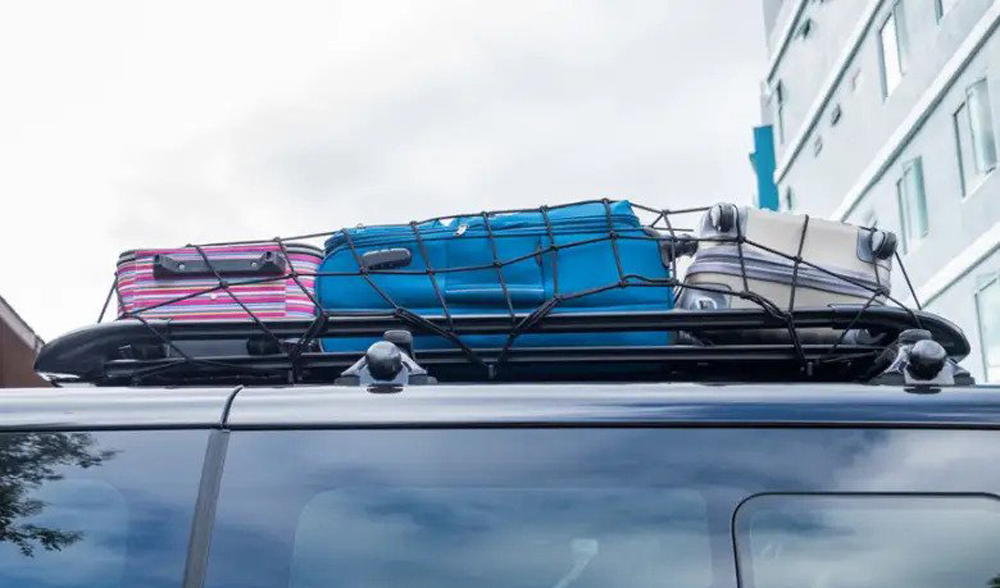
When a roof rack is fully loaded, the center of gravity of the vehicle is raised, making it more susceptible to swaying, especially at high speeds. Improper packing of the roof rack can result in load shifts, leading to various driving issues. For instance, if the weight is too far towards the front, the car may dive forward when braking. On the other hand, if the weight is too far towards the back, the steering may feel unstable. Therefore, it is crucial to pack a stable load and ensure it is securely fastened. The trick is to distribute the weight and size of items evenly, spreading out the load as much as possible.
Note:
It’s advisable to refrain from storing liquids on the roof rack, if feasible. As the car is in motion, liquids tend to shift, causing the car to jerk and leading to a challenging and potentially hazardous driving experience.
5. Accessibility
While you may be skilled at packing your car trunk like a Tetris game, loading a roof rack is an entirely different challenge. When packing a roof rack, it is recommended to select lighter items and place the heaviest of those light items first. As loading and unloading on the road can be inconvenient, it’s advisable to pack items that won’t require frequent access. Although it may sound complex, cargo carriers offer an excellent solution to organize your goods in a confined space while creating a more aerodynamic load.